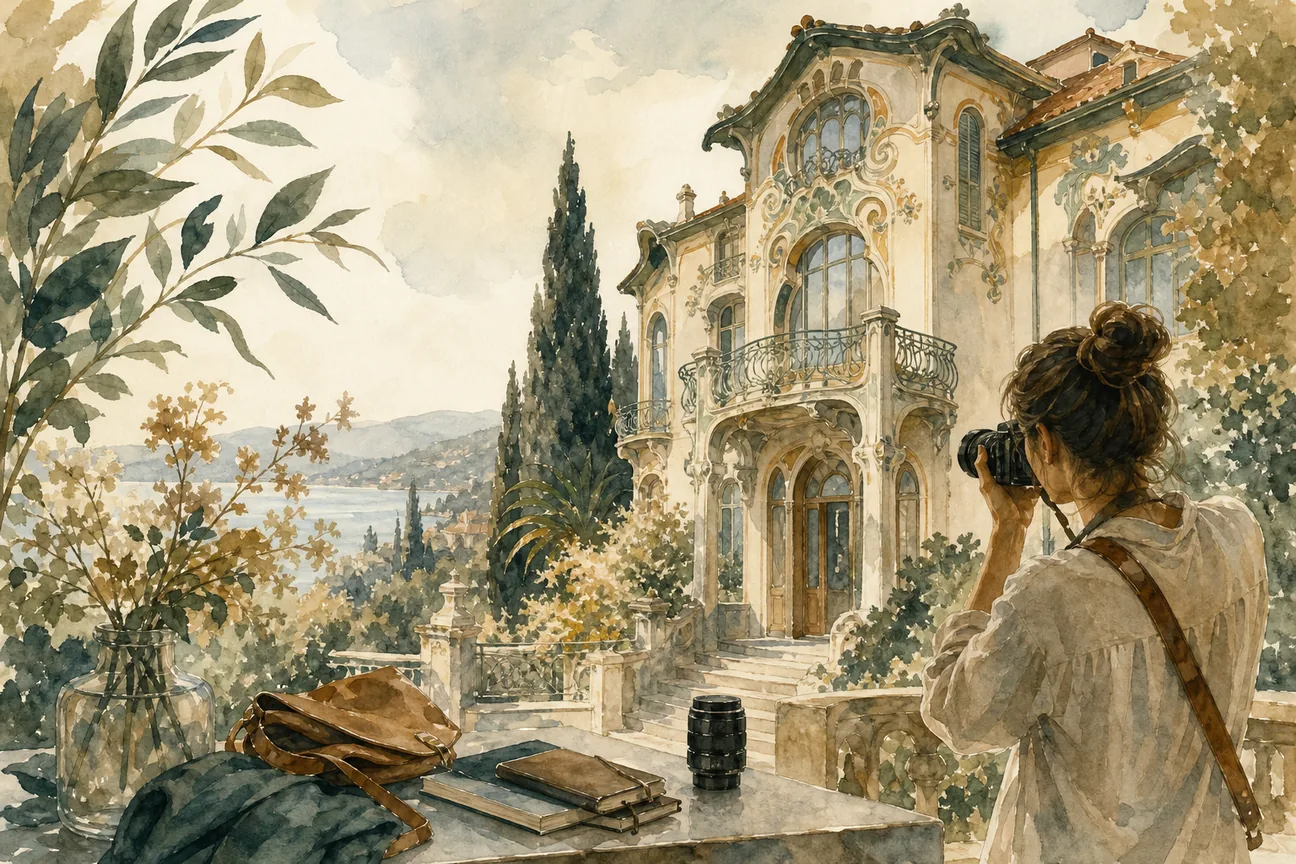
Art Nouveau villa photography workshops in Italy pair a striking historic setting with time to learn behind the camera. But a villa backdrop does not mean a photography workshop is already scheduled there. Here are eight settings and workshop formats, with a clear note on what is confirmed and what needs arranging.
We analyzed 33 YouTube comments about villa art nouveau photography workshop and found that 24% mentioned original materials and historic authenticity.
Table of Contents
- Villino Rubini
- Villa on Lago Maggiore
- Tuscany villa workshops
- Puglia historic villas
- Multi-day villa workshops
- Art Nouveau detail workshops
- Historic villa architecture workshops
- Portfolio-led villa workshops
- Frequently asked questions
- Conclusion
1. Villino Rubini
Villino Rubini is a private Art Nouveau estate built in 1892 in Brunate, above Lake Como. Its studio and gardens give a photography group options for indoor work and outdoor shoots. The original ceiling mouldings, floors, and period details remain in place after a recent restoration.
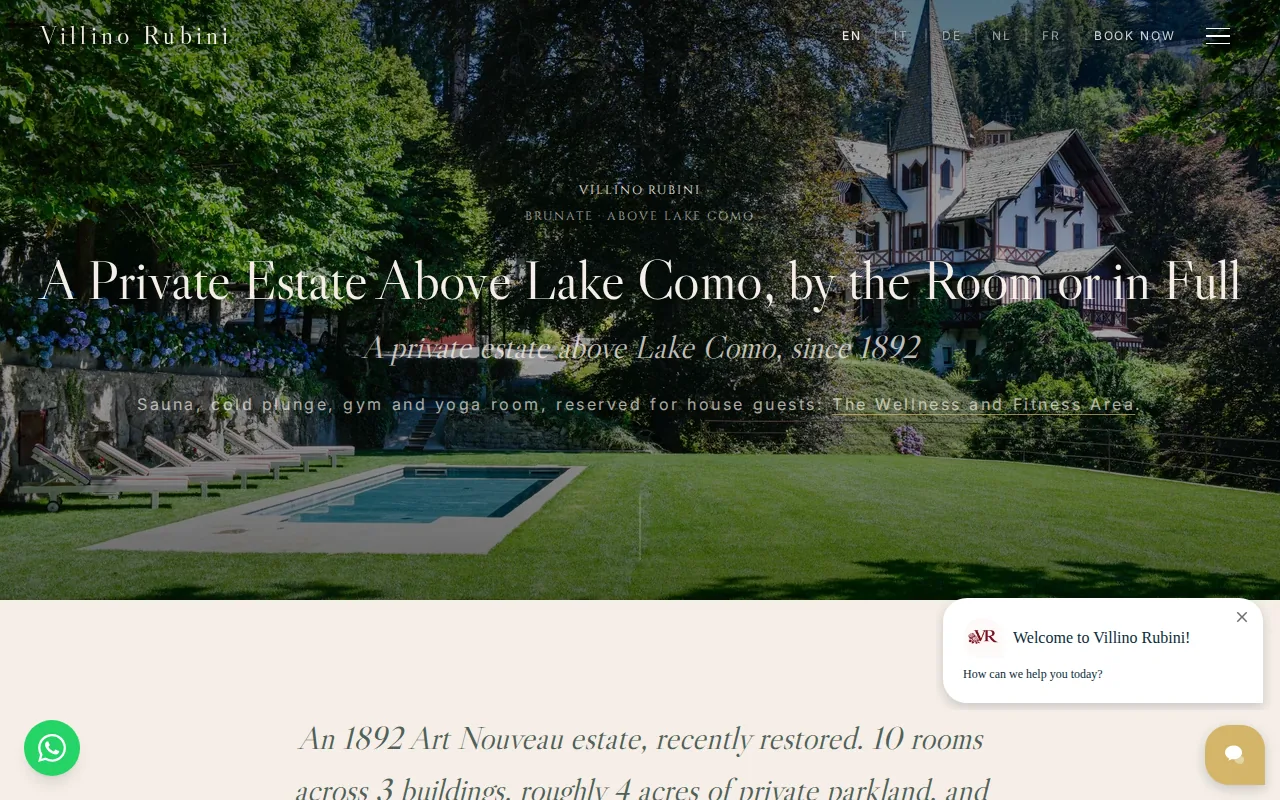
With ten rooms across three buildings and space for up to nineteen guests, it can suit a small group staying together. The estate also has a heated pool, spa, sauna, gym, and private grounds of roughly four acres. Those features make the setting particularly adaptable: a group can work on interiors, then move outside for garden portraits or detail studies.
We do not advertise a standing photography workshop schedule. Instead, organizers can ask us about a stay or a shoot and plan the teaching separately. Our Art Nouveau photo and film setting is the best place to start if you are comparing a venue-only booking with a group stay.
For a photographer, the useful distinction is clear: the estate supplies a rare historic backdrop and dedicated studio space, while the instructor and class plan need to be arranged.
2. Villa on Lago Maggiore
Villa on Lago Maggiore is a Liberty-style villa in Stresa, built in 1895. It is a strong architectural alternative for someone who wants a period villa and garden setting, rather than a confirmed photography course.
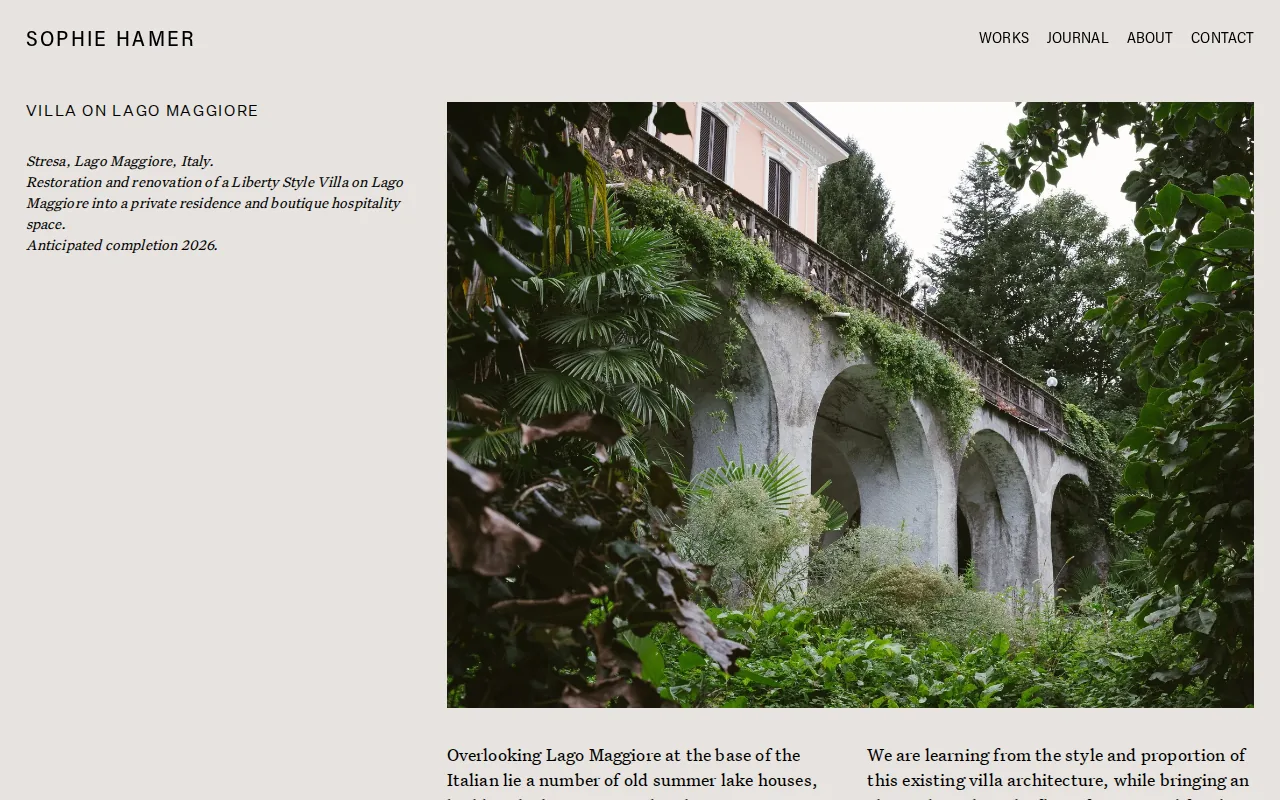
The listed grounds include a garden, pool, pool pavilion, and garage. That mix can support varied visual studies: architectural lines around the villa, repeated shapes in garden paths, or reflections around the pool. These are possible photography subjects, not a published workshop itinerary.
Italian Art Nouveau is often called Liberty style. Use that context to shape a brief around period details instead of treating the villa as a generic backdrop.
Confirm access, group capacity, dates, and whether photography instruction can be arranged before building travel plans around this setting.
3. Tuscany villa workshops
Tuscany is a good fit for photographers who want landscape work alongside a historic stay. One described landscape workshop uses a private base in Tuscany. It is a photography workshop.
The curriculum focuses on composition in uncluttered scenes. Participants work with spacing, visual rhythm, layers, and changing light. Field sessions are paired with image reviews and post-processing, so photographers can test an idea, discuss the result, then apply the lesson on another shoot.
The workshop page says the 2027 edition is sold out and invites photographers to join a priority list for 2028 dates and booking details. It also describes a group capped at six, with a minimum of five. That small format allows more time for individual feedback, though it is best suited to people who already feel comfortable using their camera.
Think of this as a landscape-first option. Ask whether a villa stay can be added only if the historic architecture is as important as the countryside work.
4. Puglia historic villas
Puglia brings a distinct regional setting to a photography brief. Treat it as a place to investigate, not a ready-made course. Before booking, ask for the villa’s architectural period and the workshop’s teaching plan.
A useful brief might ask participants to compare close architectural details with wider views of a building in its setting. Warm stone, patterned surfaces, and strong light can guide visual choices, but those should be tested at the actual venue. Do not assume an attractive regional villa is Art Nouveau or that a stay includes photography lessons.
For a group planning Puglia, confirm the dates, lodging, instructor, and access to interiors in writing. Then ask what happens in poor weather and whether the plan includes time for image review. Those details tell you more than a broad promise of creative inspiration.
5. Multi-day villa workshops
A multi-day format gives photographers time to revisit a subject as light changes. It can also leave room for meals, local culture, and travel beyond the daily shooting session. One Italy workshop account describes a social learning atmosphere where participants build skills together, then take those skills home for continued practice.
When comparing a villa-based program, ask for the actual daily rhythm. Find out when field sessions begin, how image feedback works, and whether free time is built in. Also check what lodging and local transport cover. A week of photography can feel very different when participants stay in one base rather than changing rooms during the trip.
At Villino Rubini, groups can ask about private hire or a stay shaped around a shared interest. Our wellness retreat Italy planning notes explain how an interest-based stay can fit a group’s pace. Photography instruction itself needs a separate plan with the organizer.
Planning note: Ask for a written schedule before paying a deposit. It should name the teaching sessions, lodging arrangement, and any transport included.
6. Art Nouveau detail workshops
A detail-focused workshop teaches participants to look closely before they press the shutter. Italian Liberty architecture gives a brief plenty to work with: flowing lines, plant forms, decorative ironwork, stained glass, and patterned surfaces. The style grew from wider European Art Nouveau influences, while taking on local forms across Italy.
Photographers can practice making a small detail read clearly within a larger interior. For example, frame an ornamental ceiling moulding with enough surrounding space to show its scale. Then try a closer crop that emphasizes its curve. The two images tell different stories, even when they come from the same room.
At Villino Rubini, original ceiling mouldings, floors, and period details give an instructor material for that kind of close looking. The estate is set in Brunate, above Lake Como, and the grounds add a second setting for studying forms inspired by nature.
Check how the organizer will protect historic interiors during a shoot. A clear plan should cover equipment placement and access to rooms. For a first session, simple camera movement and available light are often a better teaching focus than specialist gear.
7. Historic villa architecture workshops
An architecture-focused workshop needs both exterior and interior practice. Participants can study how a facade’s shape changes with distance, then work indoors with the lines and details of a room. The venue matters: a historic building can give the class a real subject, but access rules and the instructor’s plan determine what participants can photograph.
Ask whether the workshop covers composition, exposure, and image review. If it mentions specialized lenses or drones, ask how those tools fit the venue’s rules and the course goals. Do not assume a listed villa permits every kind of equipment or access.
Villino Rubini can be considered as a setting for a private photography group because the estate has a studio and gardens as well as preserved Art Nouveau details. The studio gives an organizer a place to discuss images away from the shoot. A garden session can offer a change of scene without leaving the grounds.
Look for a specific lesson plan, not just a location description. A useful program names what participants will practice and how they will get feedback.
8. Portfolio-led villa workshops
A portfolio-led format starts with the images participants want to make or improve. It works well for photographers who need a teacher to respond to their choices, not only give a general talk. Some Italy photography programs describe daily field instruction and evening critique in groups of no more than seven.
Before choosing one, ask what participants should bring for review. A small set of recent images can help the instructor see whether the main goal is stronger composition, a more consistent visual story, or confidence photographing interiors. Ask how much time is set aside for individual feedback.
At a villa, portfolio work can connect the lesson to the place itself. A participant might photograph an interior detail, review the image, then return with a clearer idea of framing. For a group considering a stay at Villino Rubini, the villa rental details can help frame a conversation about room arrangements and the length of the visit.
The key distinction is that a portfolio workshop is a teaching format, not a promise that a particular villa runs classes. Confirm who teaches and what the booking includes.
Frequently asked questions
Are there Art Nouveau villa photography workshops in Italy?
Villino Rubini has an Art Nouveau estate, a studio, and gardens that can suit a group shoot. Ask the venue and instructor to confirm dates, teaching, access, and lodging before you book.
Does Villino Rubini run a scheduled photography workshop?
Villino Rubini is a photography-friendly estate, but the information here does not establish a standing workshop calendar. The estate has a studio, gardens, preserved Art Nouveau details, and accommodation for up to nineteen guests. Organizers should ask about a stay or shoot, then arrange an instructor and course plan separately.
What should a villa photography workshop teach?
A strong workshop should spell out its lessons before booking. Look for time on composition and light, plus image review or post-processing if those matter to you. For a historic villa, ask how the instructor will cover interior lines and decorative details. Confirm whether participants can photograph indoors and what equipment is suitable.
How do I compare workshop dates and booking details?
Ask for confirmed dates, group size, lodging terms, and a list of what the fee includes. Check whether transport, meals, and instruction are part of the booking. The Tuscany program described here says its 2027 edition is sold out and its priority list is for 2028 details. Treat those dates as specific to that program, not to other villas.
Conclusion
For an Art Nouveau setting with an on-site studio and gardens, start with Villino Rubini. Contact us through the estate website to discuss a stay or photography shoot, then confirm the instructor and workshop schedule separately.
Occasional stories from the estate, sent a few times a year at most.