
Even premium Italian wedding planners can leave key details unstated. Coverage may be clear, while pricing, capacity, and service scope remain private. A practical comparison of wedding venues in Italy can help you frame those questions. If you are planning a wedding with a wedding planner in Italy, start with a firm brief, then test every part of the plan against the estate, your guests, and the law.
Table of Contents
- Step 1: Define the Wedding Brief, Guest Plan, and Booking Scenario
- Step 2: Match the Planner to the Estate and the Wedding Format
- Step 3: Build the Ceremony, Reception, and Guest-Stay Plan
- Step 4: Coordinate Suppliers, Legal Details, and the Wedding-Day Schedule
- Step 5: Add Experience Stays and Finish the Guest Communication Plan
- FAQ: Planning a Wedding in Italy with a Private Estate
Step 1: Define the Wedding Brief, Guest Plan, and Booking Scenario
Your wedding planner Italy search should begin with a one-page brief. This gives every planner the same facts and makes vague replies easy to spot.
Write down your target date, guest count, ceremony type, meal style, music needs, and stay plan. Add the parts that cannot change. Perhaps you need a civil ceremony. Perhaps your parents need rooms close to the main house. Perhaps the reception must stay outdoors.
Then split the guest count into useful groups:
- Guests who need rooms on site.
- Guests who need nearby lodging.
- Children, older guests, or anyone who may need less walking.
- Suppliers and staff who need access during set-up.
Next, choose the booking scenario. A wedding may need a single event date, several nights for the couple, or full estate hire for the whole group. These are different plans. Ask what is included in each one before you compare proposals.
For example, Villino Rubini has ten rooms across the Villa, Dependance, and Orangerie. The estate sleeps up to nineteen guests and has eleven bathrooms. That makes it a strong fit for a small wedding party staying together, rather than a large guest block.
Ask each planner to answer these points in writing:
- How many guests can dine outdoors?
- Which spaces are available for the ceremony and meal?
- Can the estate host the couple and close family?
- Who handles local supplier contact?
- What happens if rain changes the plan?
At Villino Rubini, the gardens can seat up to one hundred for dinner under a tent. Large indoor dining should not be assumed. Indoor spaces suit smaller groups, while the garden plan carries the larger dinner.
By now you should have a guest range, a preferred date window, and a clear idea of the stay you want. That brief is the first useful test of a planner.
Step 2: Match the Planner to the Estate and the Wedding Format
A wedding planner in Italy must match the event format to the place. A planner who works well with a city hotel may not suit a private Art Nouveau estate in the hills above Lake Como.
Start by asking how the planner works with private houses. You need someone who can manage a home with its own rhythm. That includes guest movement between buildings, quiet hours, garden access, supplier arrival, and care for original features.
Villino Rubini is a private estate built in 1892. Its Art Nouveau details include original ceiling mouldings, floors, and period features. The house was recently restored without replacing that character. Your planner should understand that decoration must add to the setting, not cover it.
The wedding format matters just as much. A ceremony followed by an outdoor dinner has a different flow from a small family lunch. A symbolic ceremony may need one kind of celebrant. A civil ceremony may need another set of documents and local checks.
Wedding customs vary by culture, faith, country, and family. Ceremonies often include vows, a public declaration, and a reception afterward. General background on wedding customs can serve only as a starting point. Your planner still needs to confirm the rules for your nationality and ceremony type.
Request a sample planning path before you sign. It should show who leads each task. Look for clear ownership of:
- Venue checks and access times.
- Supplier briefs and arrival windows.
- Guest transport between Como and Brunate.
- Rain planning for an outdoor dinner.
- Payment dates and cancellation terms.
Public information can be thin in this market. onefinestay lists coverage in Tuscany, Lake Como, the Amalfi Coast, Florence, and Rome. Red Savannah is another source to review. Planning details and pricing may require a direct conversation. That gap means a direct conversation is part of your research, not a sign that the work is already understood.
Choose the planner who asks precise questions about the house. Geographic reach is useful, but local working knowledge is what keeps a private estate wedding calm.
Step 3: Build the Ceremony, Reception, and Guest-Stay Plan
Once the planner and estate fit, draw the guest journey through the day. A wedding planner Italy brief should show where people stand, sit, wait, eat, and return to their rooms.
Begin with the ceremony. Mark the arrival route and the position of the couple. Then plan the gap before dinner. Guests may need shade, drinks, a place to sit, or time to change. Do not leave this gap blank. It is where delays tend to grow.
At Villino Rubini, the grounds include gardens, a heated pool, a spa, a sauna, a gym, and a studio. These spaces are part of a private estate, so access should be agreed in advance. They are not automatically event spaces. Ask the planner to state which areas belong to the wedding plan and which remain quiet guest areas.
For dinner, confirm the weather plan before you approve the layout. The estate can seat up to one hundred outdoors under a tent. A larger dinner needs a proper tent plan, with space for service routes and guest movement. A small indoor gathering is a different choice, with a different room plan.
Now map the rooms. The Villa has five rooms. The Dependance has three. The Orangerie has two. Place older guests and anyone who needs easy access where the route is simplest. Give the planner a rooming list without private details that suppliers do not need.
Keep transport simple. Como is ten minutes below the estate, and the private shuttle runs to the historic Como-Brunate funicular, which has operated since 1894. Confirm the last return time, the number of planned journeys, and what happens if a guest misses the group transfer.
Use a guest plan with four columns:
- Guest name or group.
- Room or nearby stay.
- Arrival and departure plan.
- Mobility or meal notes.
For more detail on the setting and wedding arrangements, review the Lake Como wedding venue information while you build the plan. It can help you keep venue facts separate from ideas that still need approval.
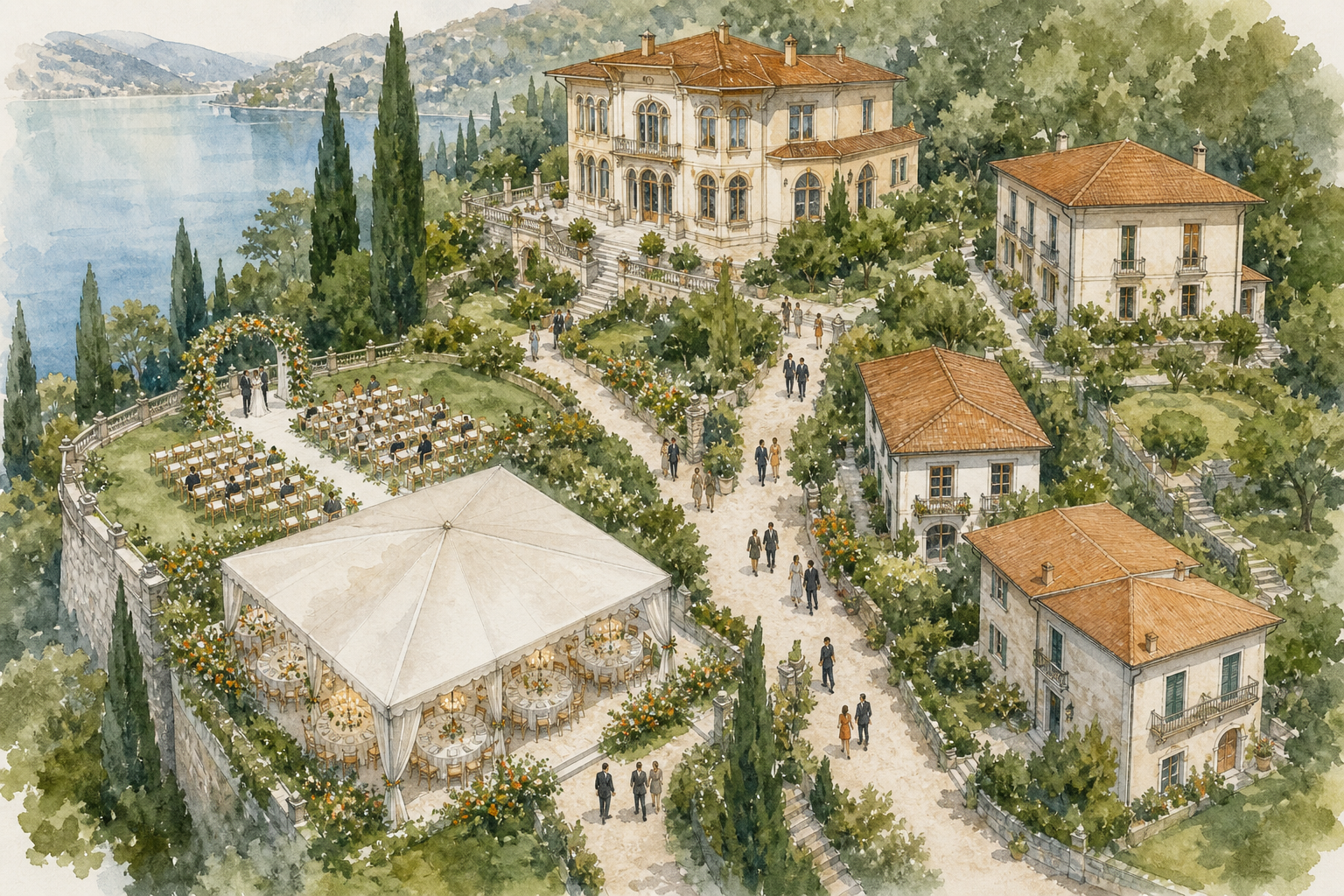
The goal is a day that feels natural because the movement has been tested. Walk the route with the planner, even if the first visit is by video. A five-minute gap on paper can become a long wait on a hillside.
Step 4: Coordinate Suppliers, Legal Details, and the Wedding-Day Schedule
Your wedding planner Italy schedule should now turn the design into work orders. Every supplier needs a named contact, an arrival time, a set-up point, and a clear pack-down rule.
Ask the planner to build one supplier sheet. Include the florist, caterer, rental team, photographer, music provider, celebrant, transport lead, and tent crew only when those roles apply to your event. Record what each person brings and what the estate supplies.
Legal checks need their own track. First decide if the ceremony is civil, religious, or symbolic. Then ask the planner what the local authority requires for your nationality. Confirm document rules with the relevant authority. Do not rely on a supplier's memory for a legal deadline.
Religious ceremonies may have rules about the building and the celebrant. Civil ceremonies can also have location limits. Your planner should explain which parts can happen at the estate and which need another approved setting.
The ceremony is often followed by a reception, with customs such as speeches, music, a first dance, or cake cutting varying by family and culture. Consider which traditions you may want to include or leave out.
Build the day in blocks rather than minute-by-minute promises:
- Guest arrival and welcome.
- Preparation and supplier set-up.
- Ceremony.
- Portraits and guest pause.
- Dinner service.
- Speeches and music.
- Departure or late gathering.
Add a private buffer before the ceremony. Add another before dinner. The planner should hold those buffers, not fill them with extra photo time or a late supplier task.
Place the video or photo team where they can work without crossing guest paths. The same rule applies to catering. At an outdoor dinner, service routes must stay clear of the ceremony area and the guest tables.
By the final planning meeting, you should have one schedule, one contact sheet, and one weather decision point. If two people believe they own the same task, the task is not yet assigned.
Step 5: Add Experience Stays and Finish the Guest Communication Plan
A wedding planner in Italy can help shape the days around the wedding, not only the ceremony itself. This works best when guest plans stay within the estate's real offer.
At Villino Rubini, guests may use the private grounds during their stay. The heated pool, spa, sauna, gym, and studio give the group quiet ways to spend time together. The four acres of beech forest also give the estate a strong sense of space above Lake Como.
Keep the plan modest. A welcome breakfast may be enough for the first morning. A short walk may suit guests who arrive tired. Guests who want a wider Italian itinerary can use Brunate as a base for Como, Bellagio, or Milan, with travel times checked before plans are printed.
If you are considering a boat element on Lake Como, treat it as a separate supplier plan. A boat broker guide may help explain the work involved in listings, local rules, and qualified buyers, but your wedding planner must still confirm whether a boat provider fits your date and guest movement.
Guest communication should answer the questions people will ask at midnight:
- Where do I arrive?
- How do I reach Brunate?
- What should I wear for the ceremony and dinner?
- When does the shuttle run?
- Who do I contact during the wedding?
- Which activities are planned, and which are optional?
Send one first note after the booking. Send the full guest guide once rooms and transport are fixed. Send a short final note with arrival details close to the event. Keep changes in one place. Multiple chat threads create mistakes.
For couples who want to talk through shared expectations before the final plans are set, a resource on relationship compatibility tests for couples may offer a useful prompt for discussion. It should support a conversation, not replace one.
Make one person the guest contact on the day. It should not be the couple. The planner or a trusted host can answer questions while you stay with your family and friends.
FAQ: Planning a Wedding in Italy with a Private Estate
How far in advance should I hire a wedding planner in Italy?
Hire a wedding planner as soon as you have a date window and guest range. A private estate wedding needs early checks for ceremony rules, supplier access, guest rooms, and outdoor dinner plans. If your date is flexible, share several options. That gives the planner more room to match the house and the people you want involved.
Can a private estate host a large wedding dinner?
It depends on the estate and its approved layout. Villino Rubini can seat up to one hundred guests outdoors under a tent in the gardens. Indoor dining is for smaller groups. Ask for a site plan that shows tables, service routes, weather cover, and guest access before you set the final count.
What should a wedding planner handle in Italy?
A wedding planner should handle the tasks that need local control. That may include supplier coordination, venue access, transport timing, ceremony checks, guest communication, and the wedding-day schedule. Ask for the exact service scope in writing. Premium planners do not always publish prices or capacity, so direct questions are necessary.
Can guests stay at the wedding estate?
Yes, when the estate has enough rooms for your group. Villino Rubini has ten rooms across three buildings and sleeps up to nineteen guests. Use the rooms for the couple, close family, or key guests who benefit from staying together. Arrange nearby lodging for everyone else, then give each group clear transfer details.
What happens if an outdoor wedding in Italy gets rain?
Rain planning should be agreed before invitations go out. Confirm the tent plan, indoor limit, supplier change deadline, guest routes, and decision time. At a private estate, the indoor rooms may suit a smaller gathering but cannot replace a large outdoor dinner without a new layout. Put the weather call in the master schedule.
Choose a planner who can explain the whole day in plain terms and match it to the estate's actual limits. Then send your one-page brief to Villino Rubini and ask for a plan based on your guest count, ceremony type, and preferred stay.
Occasional stories from the estate, sent a few times a year at most.